
Can a Hong Kong Company with Outstanding Debt Be Deregistered? Ultimate 2026 Guide
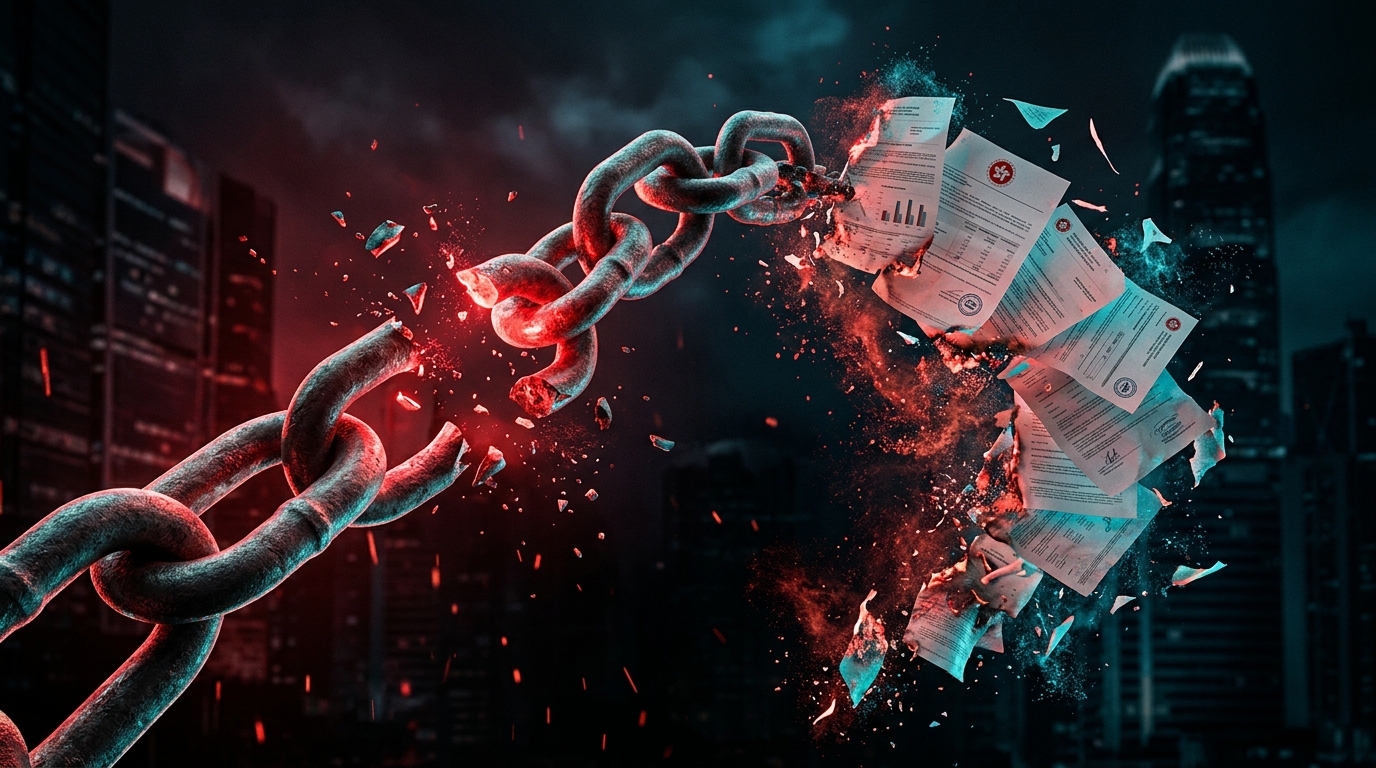
Can a Hong Kong Company with Outstanding Debt Be Deregistered? Ultimate 2026 Guide
Many business owners and investors operating in Hong Kong face a complex legal and financial dilemma when closing operations or restructuring: "Can a Hong Kong company with outstanding debt be deregistered?" and "What should I do if a Hong Kong company has unpaid debts upon deregistration?" Under the increasingly strict regulatory environment enforced by the Hong Kong Companies Registry and the Inland Revenue Department (IRD) in 2026, handling company deregistration with existing liabilities requires utmost caution.
In this ultimate guide, senior corporate restructuring and legal specialists at NexvoraHK provide an in-depth analysis of the statutory boundaries of Hong Kong company deregistration (Deregistration), legal avenues when debts exist, a thorough comparison between deregistration and liquidation, and the severe legal ramifications of concealing debts to force deregistration.
1. Statutory Prerequisites for Hong Kong Company Deregistration: Why Can't a Company with Debt Be Deregistered Directly?
Before exploring whether a Hong Kong company with debt can be deregistered, it is mandatory to clarify the strict statutory conditions governing "Deregistration" under Hong Kong law.
1. Core Restrictions under Section 750 of the Hong Kong Companies Ordinance
According to Section 750 of the Hong Kong Companies Ordinance (Cap. 622), a private company or a company limited by guarantee applying for deregistration must satisfy all of the following statutory conditions simultaneously:
- All members (shareholders) of the company agree to the deregistration;
- The company has not commenced operation or business, or has ceased operation or business for more than 3 months immediately preceding the application;
- The company has no outstanding liabilities or debts;
- The company is not a party to any legal proceedings;
- The company's assets do not include immovable property situated in Hong Kong;
- The company has obtained a Notice of No Objection to a Company being Deregistered (Form IR1263) from the Commissioner of Inland Revenue.
Therefore, the statute explicitly specifies: As long as a Hong Kong company has any outstanding liabilities, debts, or contingent obligations, it is legally ineligible for simplified deregistration.
2. Examination Mechanisms of the IRD and Companies Registry
When submitting a deregistration application, the initial step is applying for the Notice of No Objection from the Hong Kong Inland Revenue Department (IRD). The IRD thoroughly inspects the company's past Profits Tax filings, Business Registration (BR) fees, and any pending tax audits. If the company owes taxes or penalties to the government, the IRD will directly reject the application.
Similarly, upon receiving the application, the Companies Registry publishes a notice in the Gazette. If any creditor lodges an objection, the deregistration process will be immediately suspended or terminated.
3. Legal Risks and Criminal Liabilities of Concealing Debt in Deregistration
Some directors attempt to force deregistration by making a false declaration to the Companies Registry while the company still carries outstanding liabilities. Under Hong Kong law, making false statements on official documents constitutes a serious criminal offense. Upon conviction, involved directors and officers may face substantial fines and imprisonment.
2. Three Legitimate Solutions when a Hong Kong Company Has Debt
When confronted with the question of what to do when a Hong Kong company has outstanding debt during deregistration, businesses must never submit false claims or abandon the company. Here are three legitimate and compliant pathways:
1. Option 1: Full Debt Settlement Followed by Standard Deregistration
This is the most straightforward and risk-free approach. The company should conduct an internal financial audit, realize available assets, or receive capital injections from shareholders to settle all outstanding liabilities owed to external creditors (including suppliers, banks, employees, and the tax authority). After repaying all debts and securing written releases from creditors, the company can proceed with standard deregistration. For details on the standard process for debt-free companies, refer to our Hong Kong Company Deregistration Guide 2026.
2. Option 2: Creditors Executing a Deed of Release or Waiver of Debt
If the company cannot repay internal debts (such as shareholder loans or intercompany balances) and the creditors agree to waive the claims, both parties can execute a legal document known as a Deed of Release or Waiver of Debt.
- Applicable Scenarios: Commonly used for shareholder loans or balances owed to parent/affiliated companies.
- Key Considerations: The waiver must be executed in the form of a legally enforceable Deed and accurately reflected in the financial statements. Once debts are legally extinguished, the company's liabilities become zero, satisfying the prerequisite for Hong Kong company deregistration.
3. Option 3: Initiating Statutory Winding-Up (Liquidation) Procedures
If the company is insolvent (unable to pay its debts) and external creditors refuse to forgive the debts, the company cannot use the deregistration procedure and must undergo statutory Winding-up (Liquidation) to terminate its legal existence.
- Members' Voluntary Winding-up: Applicable when the company is solvent and able to pay its debts in full within 12 months, initiated voluntarily by shareholders.
- Creditors' Voluntary Winding-up: Applicable when the company is insolvent, initiated either by creditors or by shareholders due to insolvency.
3. In-Depth Comparison: Deregistration vs. Winding-Up
Many clients confuse "Deregistration" with "Winding-up". The table below outlines the core differences between these two methods of dissolving a Hong Kong company:
1. Key Differences in Conditions, Timeframes, and Costs
| Comparison Item | Deregistration | Creditors' Voluntary Winding-up |
|---|---|---|
| Prerequisites | Must have zero debt, consent of all shareholders | Insolvent, unable to pay debts as they fall due |
| Target Entities | Solvent, dormant, or debt-free companies | Companies with unpaid debts and insolvent status |
| Primary Driver | Company directors and shareholders | Independent Liquidator and Creditors' Committee |
| Time Frame | Approx. 5 to 9 months | Approx. 12 to 24 months or longer |
| Cost Level | Lower (a few thousand HKD) | Higher (requires liquidation, legal, and reporting fees) |
| Legal Outcome | Company legal entity directly dissolved | Assets realized and distributed per statutory priority prior to dissolution |
2. Step-by-Step Breakdown of Creditors' Voluntary Liquidation
If a company proceeds with Creditors' Voluntary Liquidation, it undergoes the following critical steps:
- The Board of Directors resolves that the company cannot continue business due to liabilities;
- Extraordinary General Meetings of shareholders and Creditors' Meetings are convened to appoint certified public accountants or legal professionals as Liquidators;
- The Liquidator takes control of assets, investigates financial history, and distributes remaining assets strictly according to statutory priorities;
- Upon completing liquidation, a final meeting is held, and reports are filed with the Companies Registry to formally dissolve the company.
3. Selecting the Optimal Path Based on Financial Position
Before making a decision, businesses should engage professional accountants to review their Balance Sheet. Proper capital structuring during early Hong Kong company registration makes future resolution far smoother. If liabilities consist of internal shareholder loans, executing a Deed of Release before deregistration is preferred. If liabilities are substantial external debts with no means of repayment, initiating winding-up is necessary to shield directors from personal liability.
4. Pitfall Prevention: Severe Consequences of Forced Deregistration or Abandonment
In practice, some business owners attempt to abandon the company, allowing it to be struck off by the government, or conceal debt to force deregistration. Under Hong Kong law, these practices carry extremely severe risks.
1. Creditors Can Apply to Restore the Company within 20 Years
Under the Hong Kong Companies Ordinance, even if a company has been successfully deregistered, any aggrieved creditor or interested party can apply to the High Court of Hong Kong within 20 years of dissolution to restore the company to the Companies Register (Restoration of Struck-off / Deregistered Company). Once restored by court order, the company is treated as having continued in existence as if it had not been dissolved, allowing creditors to resume debt recovery and freeze corporate assets.
2. Personal Liabilities and Disqualification Orders for Directors
- Criminal Prosecution: Making false declarations during deregistration may lead to charges of fraud or breaches of the Companies Ordinance;
- Director Disqualification Order: If the court or government finds that a director engaged in misconduct or unlawful asset transfers while insolvent, the director may be disqualified from serving as a director of any Hong Kong company for up to 15 years;
- Removal of Limited Liability: If directors engage in fraudulent trading, the court can hold directors personally and unlimitedly liable for corporate debts.
3. Account Freezing and Damage to Commercial Credit
Abandoning a company leads to official government strike-off records. Directors and shareholders may face banking blacklisting when opening corporate bank accounts, applying for visas, or carrying out annual company maintenance in the future.
5. Frequently Asked Questions (FAQ) on Hong Kong Company Deregistration with Debt
Regarding hong kong deregistration with debt 2026, the NexvoraHK team has compiled key answers below:
1. Can a Hong Kong company be deregistered if it owes taxes or business registration fees?
Absolutely not. Government tax debts (including Profits Tax, Business Registration fees, Stamp Duty, and penalties) are statutory priority liabilities. The IRD will not issue a Notice of No Objection until all outstanding tax liabilities and fines are fully cleared.
2. How should supplier debts or shareholder loans be handled before deregistration?
- Supplier Debts: You must negotiate a settlement or repayment plan with suppliers, or have shareholders clear the debt and obtain formal written releases.
- Shareholder Loans: The most common compliant method is executing a Deed of Release, converting shareholder debt into capital or waiving it, bringing net liabilities to zero before applying for deregistration.
3. Can a company be deregistered directly if bank loans or credit cards are unpaid?
No. Upon receiving the Gazette notice of deregistration, banks will lodge immediate official objections and freeze all company accounts. If bank loans carry personal guarantees from directors, banks will proceed directly against personal assets.
6. NexvoraHK Professional Company Deregistration & Liquidation Services
Navigating complex debt handling and statutory deregistration in Hong Kong demands certified expertise to protect directors and shareholders.
1. Comprehensive Debt Review and Legal Compliance Assessment
NexvoraHK’s team of practicing accountants and corporate legal experts provides:
- In-depth review of financial liabilities and legal exposure;
- Drafting legally binding Deeds of Release;
- Tailored, compliant liquidation strategies for insolvent companies.
2. End-to-End Tax Clearance and Statutory Administrative Services
From filing backlogged tax returns and securing IR1263 clearance from the IRD to gazette publications with the Companies Registry, NexvoraHK delivers seamless, compliant execution to ensure your Hong Kong company exits the market safely and cleanly.
Contact NexvoraHK specialists today for a customized 2026 Hong Kong company debt deregistration compliance solution!
💡 Related Reading:
Must I close the bank account before deregistering?