
2026 Survival Guide: Received a Bank Account Closure Letter in Hong Kong? How to Clear Funds and Open a Backup Account
2026 Survival Guide: Received a Bank Account Closure Letter in Hong Kong? How to Clear Funds and Open a Backup Account
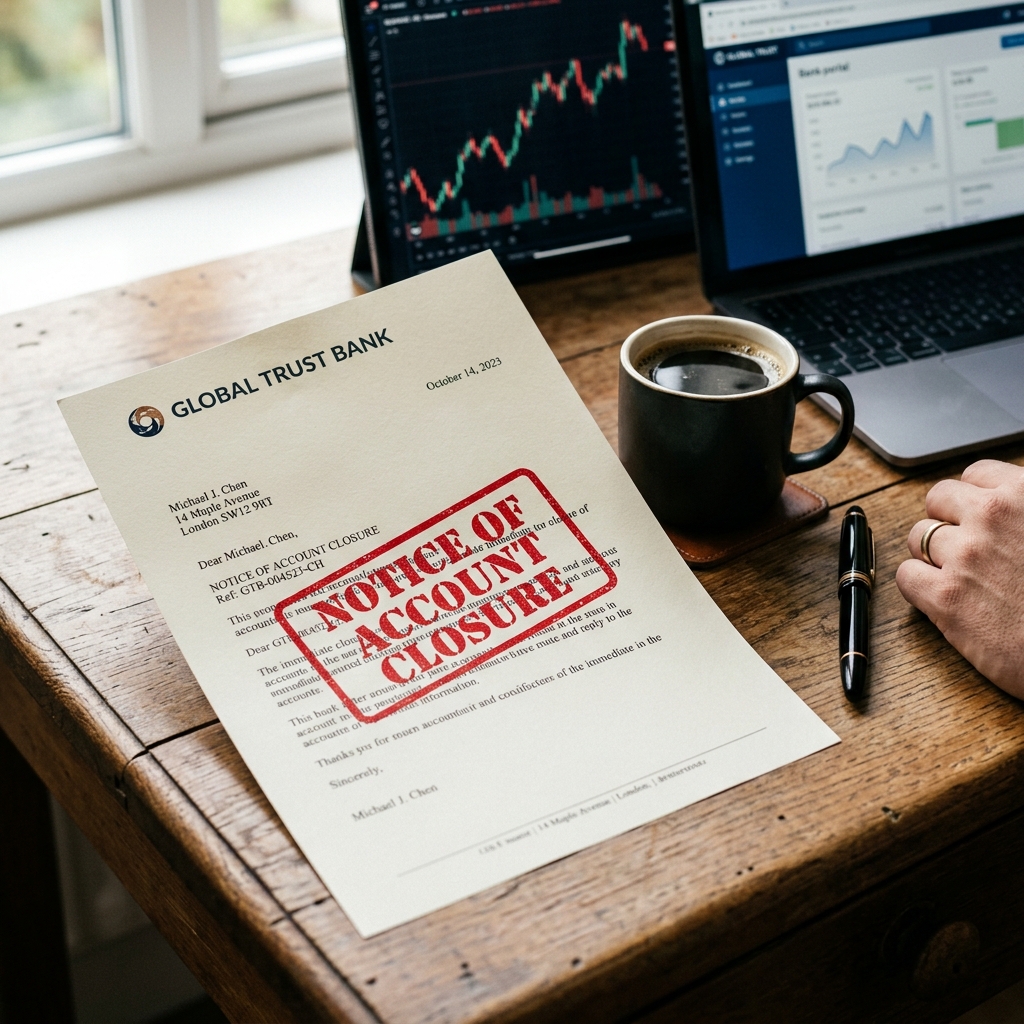
Recently, many business owners involved in foreign trade and cross-border e-commerce have been hit with a sudden "critical strike": they unexpectedly receive a letter from Hong Kong banks like HSBC, BOC, or Standard Chartered, with the glaring title "Notice of Account Closure" (or Closure Letter). The letter coldly informs you: your corporate account will be forcibly closed in 30 (or 60) days, and you must transfer your funds out as soon as possible.
The moment many bosses receive this letter, they are stunned: "I've always done legitimate business and haven't laundered money. Why is the bank closing my account? What about the millions in my account? How will clients pay me in the future?"
Don't panic! As senior corporate service advisors at NexvoraHK, we have recently handled a massive number of such emergency requests. Today, we'll break down the logic behind bank account terminations in plain terms and provide an actionable "Golden 30-Day Survival Guide".
1. Why Did I Receive a Closure Letter Out of Nowhere?
First, you must understand a cruel reality: In Hong Kong, banks do not need to give you any specific reason to close your account. They will usually just brush you off with "Commercial Decision" or "Administrative Reasons." However, based on our combat experience, 99% of account closures are triggered by the following hidden "landmines":
Triggering the Anti-Money Laundering (AML) System Alerts
This is the most common cause of death. Banks now use AI systems to automatically monitor accounts. Once your account exhibits the following traits, the system will immediately flag you:
- Fast in, fast out, leaving no balance: If $100,000 comes in today and is immediately transferred out intact tomorrow, with only a few hundred dollars ever left in the account. In the eyes of the bank, this is a typical "transit account" characteristic.
- Frequent dealings with high-risk countries: If your funds frequently come from sanctioned countries or so-called "sensitive regions" (like certain war-torn countries or high-risk money laundering areas), the bank, to protect itself, would rather mistakenly kill a thousand than let one go.
- Unclear third-party collections and payments: This is the most treacherous! The order is clearly placed by Company A, but the payment comes from a completely unrelated Company B or Individual C. If you cannot provide an extremely rigorous "Tripartite Settlement Agreement" and complete customs logistics documents, the bank will 100% suspect you of running an underground bank.
The Account Became a "Zombie Account"
Some owners open an account and have barely any transactions for months on end, or even leave it empty to save on handling fees. For a bank, maintaining an account carries compliance costs. Since you aren't generating fee income for them and are taking up their compliance review resources, why wouldn't they close your account?
Ignoring the Bank's KYC Investigations
Every year, banks randomly sample clients (known as an Annual Review). They will send emails or letters asking you to fill out the latest corporate business questionnaire or provide the latest Certified Public Accountant (CPA) Audit Report.
Some bosses don't check their emails, think "it's too troublesome, I'll just fill it out casually," or even fail to receive the letter entirely because they cheaply hired an unreliable, unlicensed secretary. Once the bank's reply deadline passes, the system determines you are "unreachable or uncooperative" and directly initiates the closure process.
2. After Receiving the Letter, Do NOT Do These 3 Stupid Things!
After receiving a Closure Letter, many people's first reaction is panic, leading to foolish moves. Memorize these three red lines:
- Do not cause a scene in the bank lobby: Hong Kong banks are highly privatized commercial institutions with the absolute right to choose their clients. The tellers have no idea why you were closed; they only see the "closure directive" in the system. Making a scene is useless and might result in security being called or you being placed on an even more severe blacklist.
- Do not rush to transfer the money to a personal account: Seeing their account about to be closed, many bosses get scared and immediately transfer millions in corporate funds directly to their private accounts. This is a massive taboo! Such huge corporate-to-private transfers have a very high probability of triggering another AML alert, causing your money to be "frozen" mid-way. At that point, you'll truly be helpless.
- Do not use this account to receive new money: Hurry up and notify all your clients to suspend payments! Once the deadline stipulated in the letter passes, the account will be locked into a "withdraw-only" state. If a client's payment comes in then, the money will be stuck in the system for a long time and eventually returned to the sender. Not only will a large handling fee be deducted, but it will also severely damage your credibility with the client.
3. The Golden 30-Day Survival Guide: Full Strategy for Clearing Funds and Opening Backup Accounts
Since the account cannot be saved, our only task now is: Safely get the money out and ensure there is a new account available to continue doing business in the future.
Step 1: Safely Clear Existing Funds (Execute Immediately)
To transfer the money out within the bank's stipulated timeframe, the safest and most compliant route is: Corporate to Corporate.
- If you have other corporate accounts for overseas or Hong Kong companies under your name (or within the same group), transfer it directly and write "Internal Transfer" in the remarks.
- If you have genuine supplier payments that need to be settled, provide the procurement contracts and invoices while the account is still alive, and pay the suppliers directly.
- If neither applies, you can temporarily transfer the money to the corporate sub-account of a compliant third-party payment platform (like certain licensed cross-border settlement tools).
Note: If your money hasn't been transferred out by the final day, the bank will simply issue you a "Cashier's Order." This check can only be deposited into another physical account with the exact same name as your company. If you don't have another account, this check is essentially a piece of waste paper.
Step 2: Emergently Open a "Backup Account" (Dual-Track Approach)
Never put all your eggs in one basket. The lesson learned this time should make you realize that any company engaged in cross-border trade must have at least two or more commercial bank accounts as backups.
Since Bank A closed you, you need to find Bank B to open an account as soon as possible. Under the current landscape, we recommend the following strategies:
1. Avoid "Affiliated" Banks
If your account was closed by HSBC, don't apply to Hang Seng in the short term (they belong to the same group, and their underlying blacklist systems are interconnected). Try Standard Chartered, BEA, DBS, or certain Chinese banks that are relatively friendly to foreign trade (such as Bank of Communications, CITIC Bank International, etc.).
2. Prepare "Impeccable" Account Opening Documents
A company with a record of account closure faces ten times stricter scrutiny when opening an account at another bank. You must prepare a set of documents sufficient to prove your "clean background":
- Complete business contracts, invoices, and Bills of Lading (B/L) for the past 3 years.
- The most important trump card: An "Unqualified Audit Report" issued by a Hong Kong Certified Public Accountant (CPA)! This is the most authoritative proof that your company is financially healthy and legally pays taxes. Without this, major banks today will barely even look at your account opening application.
3. Seek Assistance from Professional Licensed Institutions
Do not blindly make appointments online by yourself. Once you are rejected, you will leave a "Declined Record" in the banking system, making it even harder to open an account later. Find a professional institution like NexvoraHK, which holds a Trust or Company Service Provider (TCSP) license, to do a pre-screening for you.
Professional advisors know the current "appetites" and preferences of each bank. We will first help you organize all your business documents and financial statements cleanly, even helping you circumvent sensitive words that easily arouse bank suspicion, and then directly connect you with the bank's dedicated Relationship Manager to maximize your success rate.
Conclusion: The Blood and Tears Learned from Account Closure Crises
Receiving a Closure Letter is absolutely not the end of the world; it is merely the bank forcing you towards absolute "compliance."
The future of cross-border trade is not just about traffic and supply chains; it's about the soft power of tax and financial compliance. Bookkeeping promptly, auditing on time, retaining documents for every transaction, and having 2-3 backup bank accounts constitute the strongest moat to protect your business empire.
If you are currently trapped in the dilemma of a closed bank account, don't know how to safely transfer funds out, or urgently need to open a new physical backup account, please immediately contact the NexvoraHK Tax & Audit Expert Team. Time is money; let us help you salvage the account crisis and ensure your cash flow remains uninterrupted!